
Reynolds & Bauhm translates university research models, CFD simulations, and kinetic equations into precision-engineered water treatment equipment. Every dimension traceable to a research parameter.
A rigorous six-stage process that preserves every calculated parameter from your research through to the final equipment specification.
We study your published papers, thesis chapters, or technical reports. Our engineers identify the governing equations, boundary conditions, dimensionless groups, and target performance metrics that define your process.
Reaction rate constants, mass transfer coefficients, settling velocities, shear limits, and residence time distributions are extracted and tabulated as the governing design requirements for your equipment.
We convert your parameters into physical dimensions. Channel widths from Reynolds numbers. Vessel heights from settling theory. Surface areas from mass transfer correlations. Every number has a research origin.
Chemical compatibility analysis against your process fluids. Corrosion rate predictions from published data. Material certification for traceability. Selected to preserve experimental integrity, not to reduce cost.
Where your research includes CFD models, we run parallel simulations of our proposed geometry to verify that velocity profiles, turbulence intensity, and residence time distributions match your predictions.
Joint review with your research team. You verify that every critical dimension, instrumentation point, and sampling port preserves the experimental protocol your research demands.
Any water or wastewater treatment unit that can be described by equations can be built to match them. These are the research equipment categories we translate most frequently.
Continuously stirred tank reactors, plug flow reactors, sequencing batch reactors, and baffled contact tanks dimensioned from your kinetic models and mixing correlations.
Clarifiers, settlers, dissolved air flotation units, and membrane housings designed from your settling velocity data, bubble size distributions, or flux equations.
Air dissolution systems, stripping columns, absorption towers, and aeration basins sized from your mass transfer coefficient correlations and Henry's law constants.
MBBR carriers, biofilm reactors, anaerobic digesters, and activated sludge basins designed from your Monod kinetics, yield coefficients, and specific growth rate data.
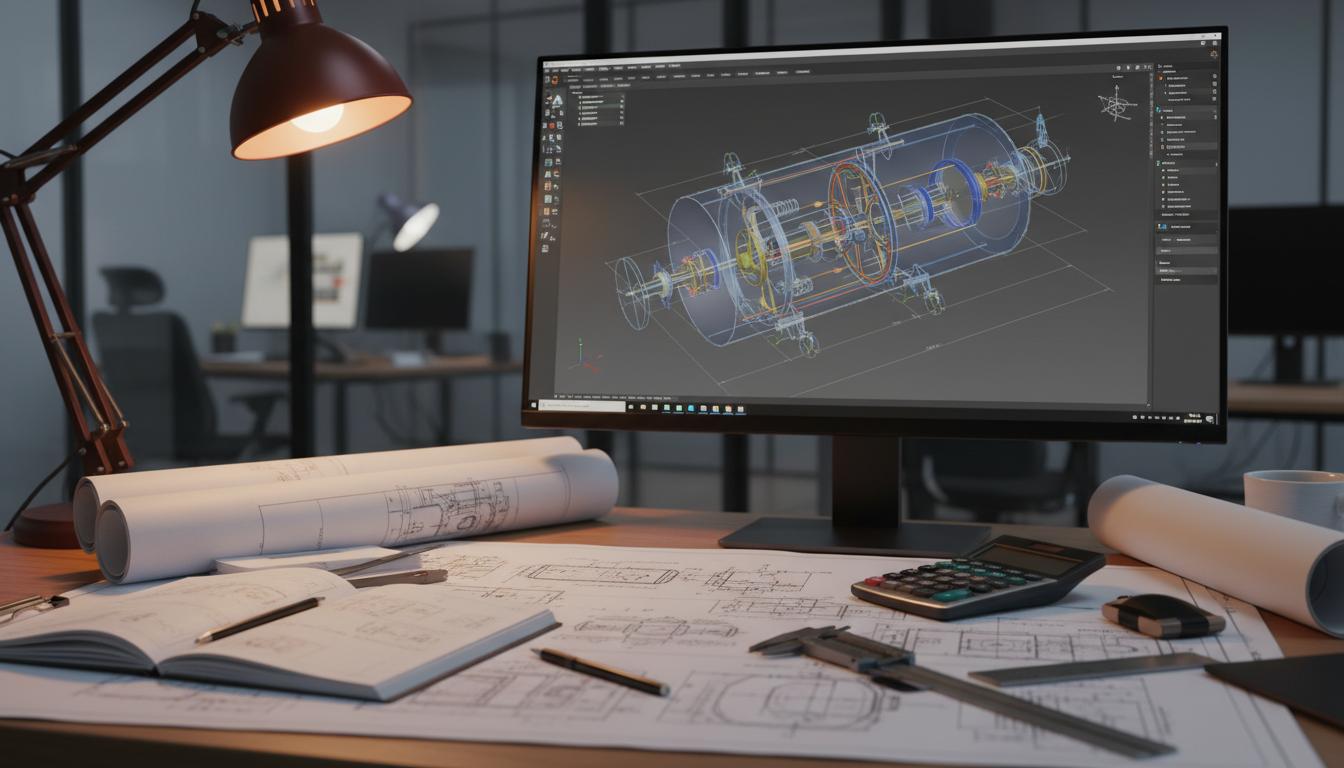
Every research equipment order includes comprehensive technical documentation to support your publications, grant reports, and ethics submissions.
A complete technical report tracing every dimension, material choice, and instrumentation specification back to the research parameter that generated it. Includes full calculation references and assumption registers.
Mill certificates for all pressure-retaining materials. Chemical composition analysis, mechanical test reports, and corrosion resistance data for your safety office and publication methods sections.
Calculated performance curves for your design influent range. Predicted removal efficiencies, hydraulic profiles, and energy consumption based on your research parameters and our engineering models.
Research-specific operation and maintenance manual written for laboratory technical staff. Includes calibration procedures, sampling protocols, and troubleshooting guidance aligned with your experimental design.
This treatment stage is engineered to achieve specific contaminant removal targets while providing stable, predictable performance across variable inlet conditions. Design parameters are calculated from wastewater characterisation data, regulatory requirements, and site-specific constraints including footprint, energy availability, and operator capability.
Design validated by CFD modelling and pilot testing to confirm performance guarantees.
Equipment selected for 20-year design life with minimal wearing parts and easy access.
Automated dosing and feedback control minimise reagent consumption and sludge production.
Online monitoring and data logging demonstrate continuous consent compliance.
| Design Flow | 10 – 5,000 m³/h (application specific) |
| Inlet Variability | Designed for 1:3 peak-to-average flow ratio |
| Removal Efficiency | 85 – 99% depending on target contaminant |
| Hydraulic Retention | Calculated from kinetic constants and safety factors |
| Power Consumption | 0.5 – 5.0 kWh/100 m³ (process dependent) |
| Chemical Dose | Auto-controlled based on online analysers |
| Sludge Production | 0.2 – 1.5 kg DS/kg contaminant removed |
| Materials | SS304, SS316L, or carbon steel with coating |
No treatment stage operates in isolation. This process is designed to receive conditioned influent from upstream stages and deliver effluent quality suitable for downstream processes. Hydraulic and organic loading rates are balanced across the complete treatment train to prevent bottlenecking and ensure overall plant efficiency. Our engineers model the complete flowsheet to optimise Capital expenditure and Operating expenditure across the plant lifecycle.
Screening, equalisation, and pre-treatment protect this stage from damage and overload.
Effluent quality ensures downstream biology, filtration, or disinfection performs optimally.
Reject streams, filtrate, and centrate are routed back to appropriate upstream points.
| Pressure Equipment | BS EN 13445 (unfired pressure vessels) and ASME VIII Div 1 for reactor vessels |
| Electrical Safety | BS EN 61010-1 for laboratory electrical equipment and control panels |
| Materials Certification | 3.1 or 3.2 mill certificates for SS316L, duplex, and exotic alloy construction |
| Welding Qualification | BS EN ISO 9606 welder qualification and BS EN 15614 WPS/PQR documentation |
| Surface Finish | Ra 0.8 µm or better for hygienic applications; pickle and passivate per ASTM A380 |
| Leak Testing | Helium leak testing to 10^-9 mbar·l/s for vacuum and high-purity systems |
| Pressure Testing | Hydrostatic to 1.5x design pressure or pneumatic to 1.1x with ASME compliance |
| Calibration | UKAS-traceable instrument calibration certificates for all sensors and transmitters |
316L stainless steel annular reactor with quartz window, UV-C LED array, and online TOC analyser for university advanced oxidation research. Delivered with full IQ/OQ documentation.
Cross-flow flat-sheet membrane test cell with 0.5-40 bar TMP control, temperature regulation to ±0.20.5°C, and automated flux decline measurement for fouling studies.
High-pressure batch reactor rated to 300 bar and 450°C with Inconel 625 construction, magnetic drive stirrer, and rupture disc protection for supercritical water research.
5 L/day anaerobic membrane bioreactor with temperature-controlled digester, biogas measurement, and automated permeate extraction for university wastewater research.
Full technical file compilation for pressure equipment, machinery, and electrical equipment directives. Declaration of conformity issued by our chartered engineers.
Provision and Use of Work Equipment Regulations compliance with hazard identification, risk scoring, and safe operating procedures for university workshops.
Explosion protection documentation for research involving flammable gases, solvents, or dusts. Zone classification and equipment category selection.
Full material and manufacturing traceability with material certificates, weld records, inspection reports, and test certificates compiled in quality dossiers.
Share your research objectives with our engineering team. We will review your theoretical models and propose a design that preserves every calculated parameter through to fabrication.
Our expertise spans multiple industries with sector-specific water treatment solutions.