
CFD thermal simulation for activated sludge, MBBR, SBR, and anaerobic reactors. Predict temperature profiles, identify thermal hotspots, and optimise cooling and aeration for maximum biological activity.
CFD thermal simulation services for water treatment equipment.
CFD thermal simulation for LED lighting enclosures and heat sinks.
CFD thermal mixing simulation for tanks, reactors, and process vessels.
CFD thermal simulation for LiDAR enclosures. Predict laser diode temperature, prevent optical window condensation, and validate.
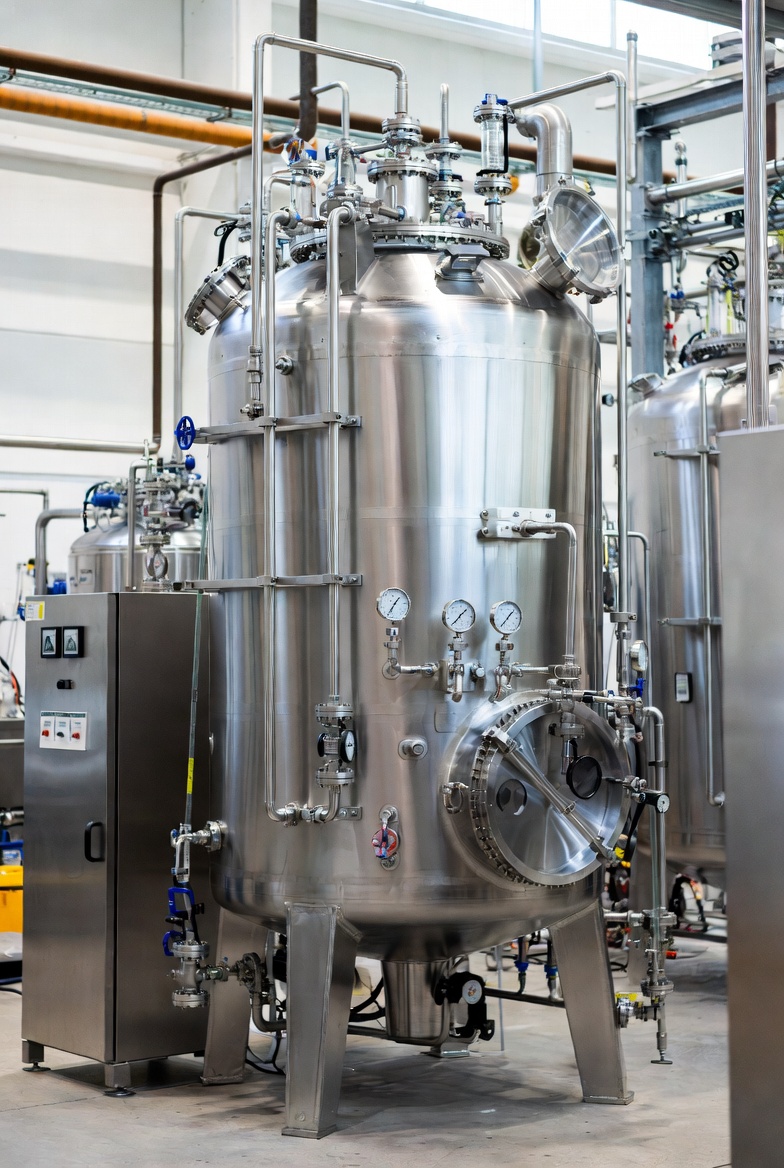
CFD-predicted temperature field in an activated sludge aeration basin
Biological wastewater treatment depends on maintaining optimal temperature for microbial activity. Aerobic processes peak at 25-35°C; anaerobic mesophilic digestion operates best at 35-38°C. Temperature excursions of even 2-3°C can shock biomass, reduce treatment efficiency, and extend recovery times. In industrial applications with high-strength wastewater, biological heat generation from substrate oxidation can raise reactor temperatures 5-10°C above ambient, requiring active cooling that conventional design cannot predict accurately.
Our bioreactor thermal CFD models couple aeration bubble dynamics, mechanical mixing, and heat generation/conduction to predict temperature profiles across the full reactor volume. We identify cold zones near walls and inlets, overheated regions around aerators, and stratification layers that compromise biomass activity. Results inform cooling coil placement, aerator spacing, and insulation requirements.
Aeration basin temperature mapping with diffused air and mechanical aerators. Predict thermal stratification in plug-flow and completely mixed configurations.
Moving bed biofilm reactor thermal analysis with carrier-mediated heat transfer and aeration cooling effects on attached biomass temperature.
Transient thermal analysis during fill, react, settle, and decant phases. Predict temperature swing and its effect on microbial batch kinetics.
Anaerobic upflow blanket reactor thermal modelling. Internal heat generation from methanogenesis and external heating jacket optimisation for mesophilic stability.
Membrane tank temperature with permeate cooling effects and aeration scour heat transfer. Prevent membrane fouling from temperature-dependent viscosity changes.
Strict temperature control (±0.5°C) for cell culture and fermentation vessels. Jacketed vessel CHT with impeller shear and sparger bubble dynamics.
| Aerobic Temperature Range | 25 – 35°C (optimal 28 – 32°C) |
| Mesophilic Anaerobic Range | 35 – 38°C (optimal 36 – 37°C) |
| Thermophilic Anaerobic Range | 50 – 57°C (optimal 52 – 55°C) |
| Heat Generation (aerobic) | 15 – 25 kJ/g COD oxidised |
| Heat Generation (anaerobic) | 3 – 5 kJ/g COD converted |
| Oxygen Transfer Rate | 2 – 8 kg O±0.2/kWh (diffused aeration) |
| Cooling Requirement | 50 – 300 kW (high-strength industrial) |
| Temperature Control Accuracy | ±0.5°C (pharmaceutical), ±1.5°C (municipal) |
A craft brewery with 500 m³/day effluent and COD of 3,500 mg/L experienced summer temperature excursions in their activated sludge plant that reduced COD removal from 92% to 78%. The 2,000 m³ aeration basin lacked cooling, and biological heat generation raised water temperatures to 38°C during peak brewing cycles. CFD thermal simulation with coupled aeration and heat generation predicted a 4°C thermal gradient from the inlet (warm, high-COD) to the outlet, with local hotspots of 40°C near the central aerator grid. The model recommended surface aerator relocation to improve circulation, installation of two 150 kW cooling coils along the long walls, and adjustment of the SRT to reduce biomass inventory and associated heat generation. Post-modification summer temperatures stabilised at 32°C ±1.5°C, COD removal recovered to 91%, and power consumption decreased 12% due to the reduced aeration required at optimal temperature.
Summer temperatures stabilised at 32°C with ±1.5°C uniformity across the basin.
Removal efficiency recovered from 78% to 91% within two weeks of thermal stabilisation.
12% aeration power reduction due to improved oxygen transfer at optimal temperature.
Reactor CAD with aerators, mixers, and cooling coils. Porous media zones represent biomass suspension density.
Volumetric heat generation from biological oxidation calculated from measured OUR or COD loading rate.
Bubble column dynamics with evaporative cooling and oxygen dissolution enthalpy effects on bulk temperature.
Coil or jacket heat removal simulation with natural or forced convection. Optimise surface area and coolant flow.
Diurnal and seasonal load variations modelled to size thermal inertia and emergency cooling capacity.
Temperature contour plots, hotspot identification, cooling duty specification, and control strategy recommendations.
Every CFD thermal simulation undergoes rigorous validation before design recommendations are issued. We correlate model predictions against analytical solutions, established empirical correlations, and field measurement data from commissioned installations. Our validation protocol ensures thermal predictions are accurate to within ±5% for outlet temperatures, ±10% for heat transfer coefficients, and ±15% for transient thermal response times.
Laminar pipe flow Graetz solution, flat plate Blasius thermal boundary layer, and sphere Nusselt number correlation agreement.
Dittus-Boelter, Gnielinski, and Petukhov correlations for turbulent tube flow within ±8% agreement across Reynolds range.
Over 50 commissioned installations with measured outlet temperatures, heat duties, and mixing times for model calibration.
Typical turnaround is 2-4 weeks for steady-state analysis and 4-8 weeks for transient simulations, depending on geometry complexity and mesh density.
STEP, IGES, or native CAD files (SolidWorks, Inventor, CATIA) are preferred. 2D drawings with critical dimensions are acceptable for simpler geometries.
Yes, our CFD-based performance predictions are backed by contractual guarantees when validated against pilot testing or field correlation.
Yes, we model boiling, condensation, freezing, melting, and evaporation using volume-of-fluid, mixture, and Eulerian-Eulerian multiphase approaches.
Typical projects vary from for single-component analysis to for full system optimisation with parametric studies.
Yes, we recommend combined CFD + pilot testing for high-value projects, using CFD to design the pilot and pilot data to validate the full-scale model.
Aeration accounts for 50–70 % of a biological plant’s electrical Operating expenditure — designing it well is the single largest lifetime saving.
kLa, OTR, SOTR and the alpha-factor corrections that anchor every aerator sizing calculation.
Read MoreSurface, diffused, jet and venturi systems compared head-to-head.
Read MoreFine-bubble grids for activated-sludge, MBBR and aerobic biological treatment.
Read MoreValidate diffuser layout, DO field and dead zones before commissioning concrete or steel.
Read MoreCFD thermal simulation identifies hotspots, thermal gradients, and inefficiencies before capital is committed. Speak with our thermal simulation engineers to model your heat transfer challenge.
Our expertise spans multiple industries with sector-specific water treatment solutions.