
Transient CFD simulation of thermal mixing in tanks, reactors, and process vessels. Predict mixing time, eliminate stratification, and optimise heating coil and agitator design for uniform temperature.
CFD thermal simulation services for water treatment equipment.
CFD thermal simulation for LED lighting enclosures and heat sinks.
CFD thermal simulation for LiDAR enclosures. Predict laser diode temperature, prevent optical window condensation, and validate.
CFD thermal simulation for automotive electronic enclosures. ECU, BMS, ADAS controller, and infotainment thermal management.
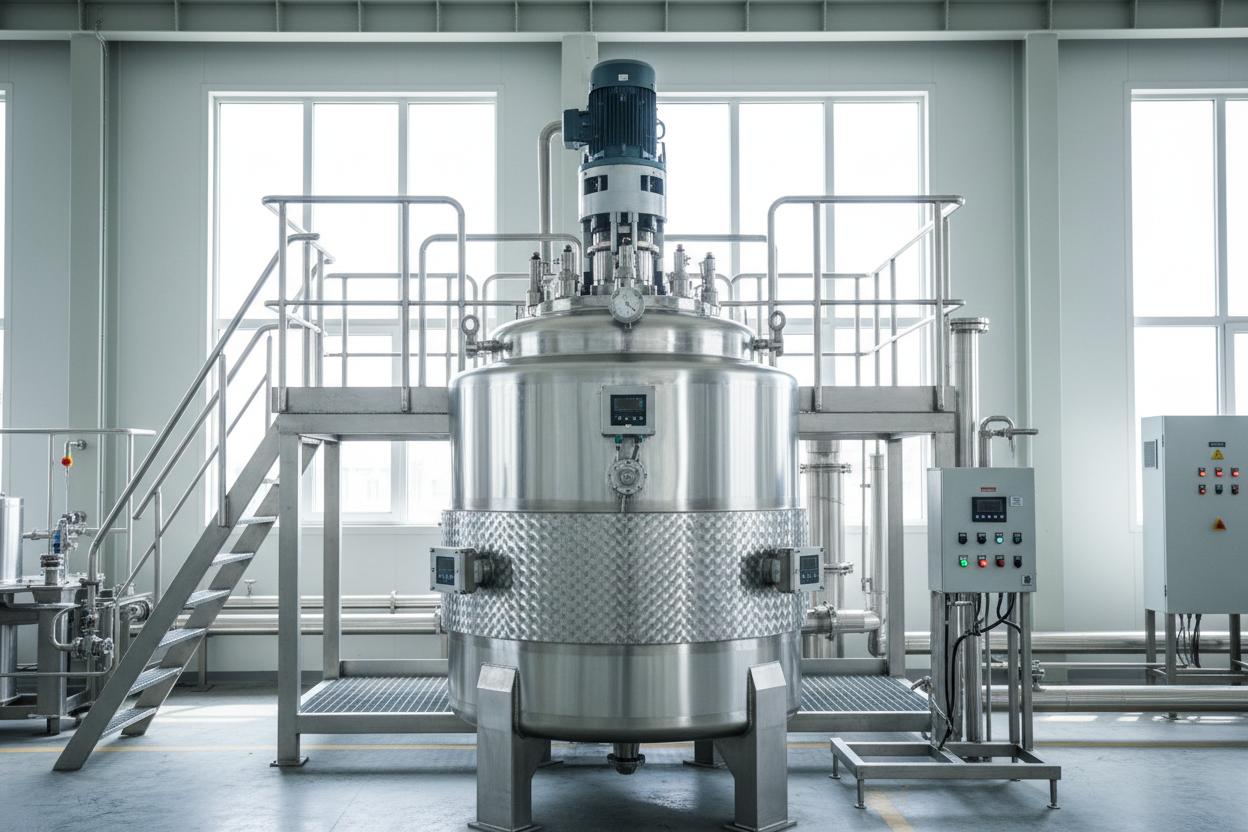
CFD-predicted thermal stratification in an equalisation tank
Thermal stratification, hot spots, and poor mixing in tanks and reactors compromise process efficiency, chemical reaction kinetics, and biological activity. In water treatment, temperature non-uniformity affects reaction rates in chemical dosing tanks, dissolved oxygen distribution in biological reactors, and thermal shock in process vessels. CFD thermal mixing simulation reveals transient temperature fields and mixing times that cannot be predicted by simple turnover calculations.
Our transient thermal mixing models track hot or cold fluid injection, wall heat transfer, and mechanical agitation to predict mixing time, maximum temperature differential, and stratification depth. Results inform inlet nozzle design, baffle placement, mixer impeller selection, and heating/cooling coil configuration.
Ensure uniform temperature of coagulant and flocculant solutions before injection. Prevent crystallisation and viscosity variation that affects dosing accuracy.
Maintain uniform mesophilic temperature (30-38°C) across activated sludge, MBBR, and UASB reactors. Identify cold zones that reduce biological activity.
Prevent thermal stratification during variable influent loading. Ensure consistent temperature to downstream biological processes.
Optimise heating/cooling coil placement and agitator speed for uniform temperature during cleaning and process cycles.
Simulate thermal plume dispersion from cooling water discharge. Predict recirculation and temperature rise at intake structures.
Prevent freezing in outdoor tanks, solar heating in dark-coloured vessels, and thermal degradation of temperature-sensitive chemicals.
| Tank Volume | 10 – 10,000 m³ |
| Inlet Temperature Variation | ±10°C from setpoint (typical) |
| Mixing Time (95% homogeneity) | 2 – 15 minutes (mechanically mixed) |
| Agitator Power | 0.1 – 2.0 kW/100 m³ (process dependent) |
| Heating/Cooling Duty | 10 – 500 kW (tank size dependent) |
| Heat Transfer Coefficient (coil) | 200 – 800 W/m²K (natural convection) |
| Wall Heat Loss | 5 – 50 W/m² (insulation dependent) |
| Stratification Depth Limit | <5% of tank depth (design target) |
3D CAD import with internal structures, coils, and agitator blades. Unsteady mesh motion for rotating impellers.
Measured or assumed temperature field. Boundary conditions for wall heat transfer, inlet flow, and ambient exposure.
Time-accurate solution with adaptive time stepping. Track thermal front propagation and eddy turnover.
Calculate coefficient of variation (CoV) of temperature across monitor points. Report time to 95% homogeneity.
Inlet nozzle orientation, baffle geometry, impeller diameter/speed, and coil layout optimised for uniformity.
Tracer study correlation, thermocouple array comparison, or published mixing time correlations (Corrsin, Norwood).
External and internal forced convection with turbulent boundary layers, entrance effects, and developing flow regions accurately captured using low-Reynolds turbulence models.
Buoyancy-driven flow from density variations with Boussinesq and full compressible formulations for high Rayleigh number applications including solar heating and passive cooling.
Nucleate pool boiling, flow boiling, and film condensation with heat transfer coefficient correlations validated against Rohsenow and Nusselt analytical solutions.
Surface-to-surface radiation and participating media radiation for high-temperature dryers, furnaces, and combustion applications with view factor calculation.
Heat transfer through packed beds, filter media, and insulation with effective thermal conductivity and non-thermal equilibrium between fluid and solid phases.
Electrical resistance heating in immersed heaters, trace heating, and electrocoagulation cells with coupled electrical potential and energy equations.
Every CFD thermal simulation undergoes rigorous validation before design recommendations are issued. We correlate model predictions against analytical solutions, established empirical correlations, and field measurement data from commissioned installations. Our validation protocol ensures that thermal predictions are accurate to within ±5% for outlet temperatures, ±10% for heat transfer coefficients, and ±15% for transient thermal response times.
Laminar pipe flow Graetz solution, flat plate Blasius thermal boundary layer, and sphere Nusselt number correlation agreement.
Dittus-Boelter, Gnielinski, and Petukhov correlations for turbulent tube flow within ±8% agreement across Reynolds range.
Over 50 commissioned installations with measured outlet temperatures, heat duties, and mixing times for model calibration.
External and internal forced convection with turbulent boundary layers, entrance effects, and developing flow regions accurately captured using low-Reynolds turbulence models.
Buoyancy-driven flow from density variations with Boussinesq and full compressible formulations for high Rayleigh number applications including solar heating and passive cooling.
Nucleate pool boiling, flow boiling, and film condensation with heat transfer coefficient correlations validated against Rohsenow and Nusselt analytical solutions.
Surface-to-surface radiation and participating media radiation for high-temperature dryers, furnaces, and combustion applications with view factor calculation.
Heat transfer through packed beds, filter media, and insulation with effective thermal conductivity and non-thermal equilibrium between fluid and solid phases.
Joule heating in immersed heaters, trace heating cables, and electrocoagulation cells with coupled electrical potential and energy equations.
Every CFD thermal simulation undergoes rigorous validation before design recommendations are issued. We correlate model predictions against analytical solutions, established empirical correlations, and field measurement data from commissioned installations. Our validation protocol ensures thermal predictions are accurate to within ±5% for outlet temperatures, ±10% for heat transfer coefficients, and ±15% for transient thermal response times.
Laminar pipe flow Graetz solution, flat plate Blasius thermal boundary layer, and sphere Nusselt number correlation agreement.
Dittus-Boelter, Gnielinski, and Petukhov correlations for turbulent tube flow within ±8% agreement across Reynolds range.
Over 50 commissioned installations with measured outlet temperatures, heat duties, and mixing times for model calibration.
CFD thermal simulation identifies hotspots, thermal gradients, and inefficiencies before capital is committed. Speak with our thermal simulation engineers to model your heat transfer challenge.
Our expertise spans multiple industries with sector-specific water treatment solutions.