
IP66 and IP67 climate-controlled electrical enclosures with active cooling, anti-condensation heating, and corrosion-resistant construction for water treatment plants in tropical, desert, and coastal environments.
CFD thermal simulation services for water treatment equipment.
CFD thermal simulation for LED lighting enclosures and heat sinks.
CFD thermal mixing simulation for tanks, reactors, and process vessels.
CFD thermal simulation for LiDAR enclosures. Predict laser diode temperature, prevent optical window condensation, and validate.
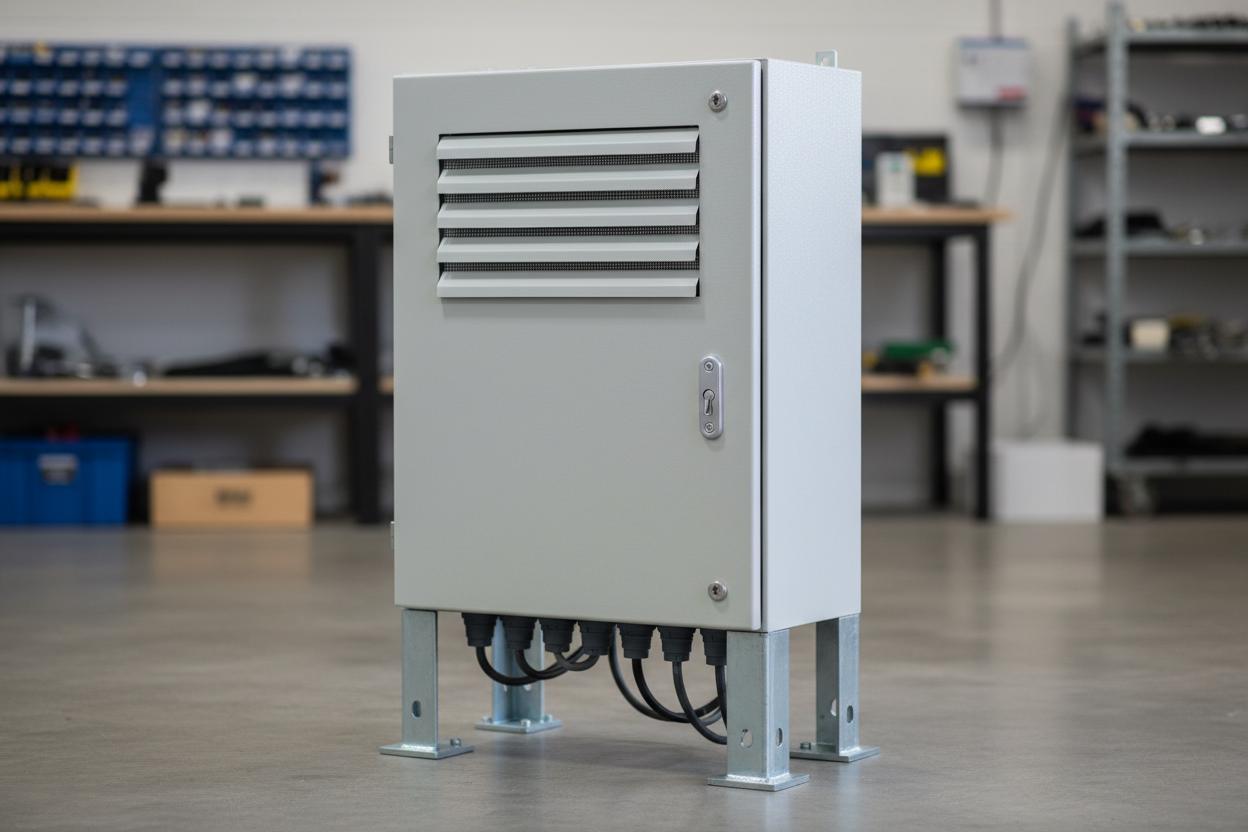
IP66-rated climate-controlled enclosure for 45°C ambient
Water treatment equipment deployed in tropical, desert, and coastal regions faces extreme environmental challenges. Ambient temperatures exceeding 45°C, relative humidity above 90%, corrosive salt-laden air, and intense solar radiation combine to degrade electrical components, cause condensation inside enclosures, and accelerate corrosion of terminals and busbars. Standard IP65 enclosures without active climate control fail within months in these conditions, leading to PLC faults, variable speed drive trips, and unplanned plant shutdowns.
Reynolds & Bauhm designs and supplies climate-controlled electrical enclosures specifically engineered for hot and humid environments. Our enclosures combine IP66 or IP67 sealing with thermostatically controlled cooling – vortex coolers, air-to-air heat exchangers, or air conditioning units – plus anti-condensation heaters, desiccant breathers, and corrosion-resistant materials. Every enclosure is sized for the actual heat load of installed equipment and validated against the specific meteorological conditions of your site.
Ambient temperatures reaching 45-50°C in desert and tropical regions raise internal enclosure temperatures above component ratings. VFDs, PLCs, and power supplies trip on thermal overload without active cooling.
Relative humidity exceeding 90% causes condensation on cold surfaces during diurnal temperature cycling. Condensation on PCB tracks causes short circuits, corrosion, and gradual insulation degradation.
Coastal salt spray, hydrogen sulphide from anaerobic processes, and chlorine from water treatment chemicals corrode unprotected steel enclosures, terminals, and contactors within 12-24 months.
Fine desert dust and tropical insects penetrate poorly sealed enclosures, clogging ventilation filters, bridging contacts, and creating conductive paths across PCB isolations.
Dark-coloured enclosures exposed to direct solar radiation experience internal temperatures 15-25°C above ambient. Solar loading must be included in cooling capacity calculations.
Tropical humidity promotes fungal growth on organic insulation materials, PCB conformal coatings, and cable sheathing, causing tracking and insulation failure.
Compressed air vortex coolers deliver maintenance-free cooling without moving parts. Ideal for dusty environments where filter maintenance is impractical. No refrigerants, no condensate drainage, operational up to 55°C ambient with 7 bar supply air.
Closed-loop cooling with sealed internal air circuit and filtered external air path. Maintains IP66 integrity while rejecting heat through aluminium core. Capacity from 50W to 2,000W thermal rejection.
Refrigeration-based cooling for high heat loads in extreme ambient conditions. Hermetic compressor, R134a or R513A refrigerant, and condensate evaporation or pumped drainage. Capacity from 300W to 4,000W.
Silicone rubber or aluminium finned heaters with thermostatic control prevent internal condensation during cool nights and seasonal temperature drops. Essential complement to active cooling systems.
SS316L or 2205 duplex stainless steel enclosures with double-seil compression gasket. Resists salt spray, chlorine, and hydrogen sulphide corrosion for 20-year service life in aggressive environments.
Marine-grade epoxy-polyurethane coating systems (NORSOK M-501 compliant) for carbon steel enclosures in offshore, coastal, and chemical plant applications. Cathodic protection options available.
| IP Rating | IP66 (dust-tight, powerful water jets) or IP67 (temporary immersion) |
| NEMA Equivalent | NEMA 4X (corrosion-resistant, watertight) or NEMA 6P (submersible) |
| Ambient Temperature Range | -20°C to +55°C (extended ranges available) |
| Relative Humidity | Up to 95% non-condensing (100% with active heating) |
| Cooling Capacity | 50W – 4,000W (enclosure size and load dependent) |
| Internal Target Temperature | +5°C to +35°C (component dependent, typically +25°C) |
| Heater Capacity | 50W – 500W (anti-condensation and freeze protection) |
| Material Options | Mild steel powder-coated, SS304, SS316L, aluminium, or GRP |
Accurate cooling system sizing requires quantification of all heat sources and heat transfer paths affecting the enclosure internal temperature. Our thermal engineers calculate each component using manufacturer data, empirical correlations, and site-specific meteorological records.
Site-specific meteorological data determines the peak cooling demand and the appropriate cooling technology. We analyse historical weather records, seasonal variation, and extreme event probabilities to ensure reliable operation across the full environmental envelope.
A 100,000 m³/day seawater reverse osmosis plant on the Arabian Gulf experienced repeated VFD failures in the high-pressure pump control room. Ambient temperatures reached 48°C in summer with 85% relative humidity and salt-laden air from the adjacent sea. Standard IP55 steel enclosures with filtered ventilation fans allowed salt dust ingress, and internal temperatures reached 68°C – 23°C above the VFD maximum rating of 45°C. Mean time between failures (MTBF) for the pump VFDs was only 4 months, causing production losses of per unplanned shutdown. Reynolds & Bauhm conducted a complete enclosure thermal audit, measured actual internal temperatures with data loggers, and calculated the cooling load at 3,200W for the 12 VFDs, 3 PLCs, and associated switchgear. We supplied SS316L IP66 enclosures with 2,000W air-to-air heat exchangers on each of four switchboards, plus 200W anti-condensation heaters with dual thermostats. Enclosure exterior was painted with solar-reflective white polyurethane to reduce solar gain by 60%. Post-installation, internal temperatures stabilised at 32°C ±3°C across the full summer ambient range. VFD MTBF extended to 36 months, and the plant achieved 99.2% availability in the first year post-upgrade – a 12% improvement in additional water production output.
Internal temperature reduced from 68°C peak to 32°C ±3°C stable operation.
VFD mean time between failures extended from 4 months to 36 months.
Plant availability improved from 87% to 99.2%, generating additional output.
Enclosure ingress protection verified by independent laboratory testing. IP66 and IP67 certificates provided with every enclosure.
Low-voltage switchgear and controlgear assemblies manufactured and tested to IEC 61439-1 and -2 with temperature rise verification.
Atmospheric corrosivity assessment and material selection guidance for C3, C4, C5, and CX (marine) environments.
Explosion-proof enclosures for Zone 1 and Zone 2 hazardous areas in oil, gas, and chemical processing applications.
Environmental testing for dry heat, damp heat, salt mist, and dust according to IEC 60068-2 series test methods.
UL508A industrial control panels and UL60947 switchgear for North American projects requiring CSA or NEC compliance.
CFD thermal simulation identifies hotspots, thermal gradients, and inefficiencies before capital is committed. Speak with our thermal simulation engineers to model your heat transfer challenge.
Our expertise spans multiple industries with sector-specific water treatment solutions.