
Vertical 316L stainless steel pressure filter vessels with hopper-bottom conical discharge are specified for food and beverage, pharmaceutical, high-purity process water and any application where media removal, internal hygiene and material traceability are primary design drivers. Conical bottoms eliminate dead zones, allow complete media drain-down and enable clean-in-place (CIP) without confined-space entry.
Design and engineering guide for pressure multimedia filter installations. Vessel sizing, manifold layout, backwash automation and commissioning for drinking water treatment at 5-100 MLD.
Engineering guide to horizontal pressure filter vessels for low-headroom sites. Factory-assembled skid units with multiple manways, automated backwash PLC and full PED compliance.
Multimedia Filter by Reynolds & Bauhm. Industrial water and wastewater treatment solutions engineered for efficiency, durability and worldwide compliance.
Engineering guide for Granular Activated Carbon (GAC) contactor installations for drinking water treatment. EBCT calculation, vessel sizing, outdoor civil installation, media selection and DWI.
The conical (hopper) bottom is the defining feature of food-grade and pharmaceutical-duty pressure filter vessels. It eliminates the flat sump found on standard pressure vessels — a zone where media fines accumulate, biofilm develops and complete drainage is impossible without manual intervention.
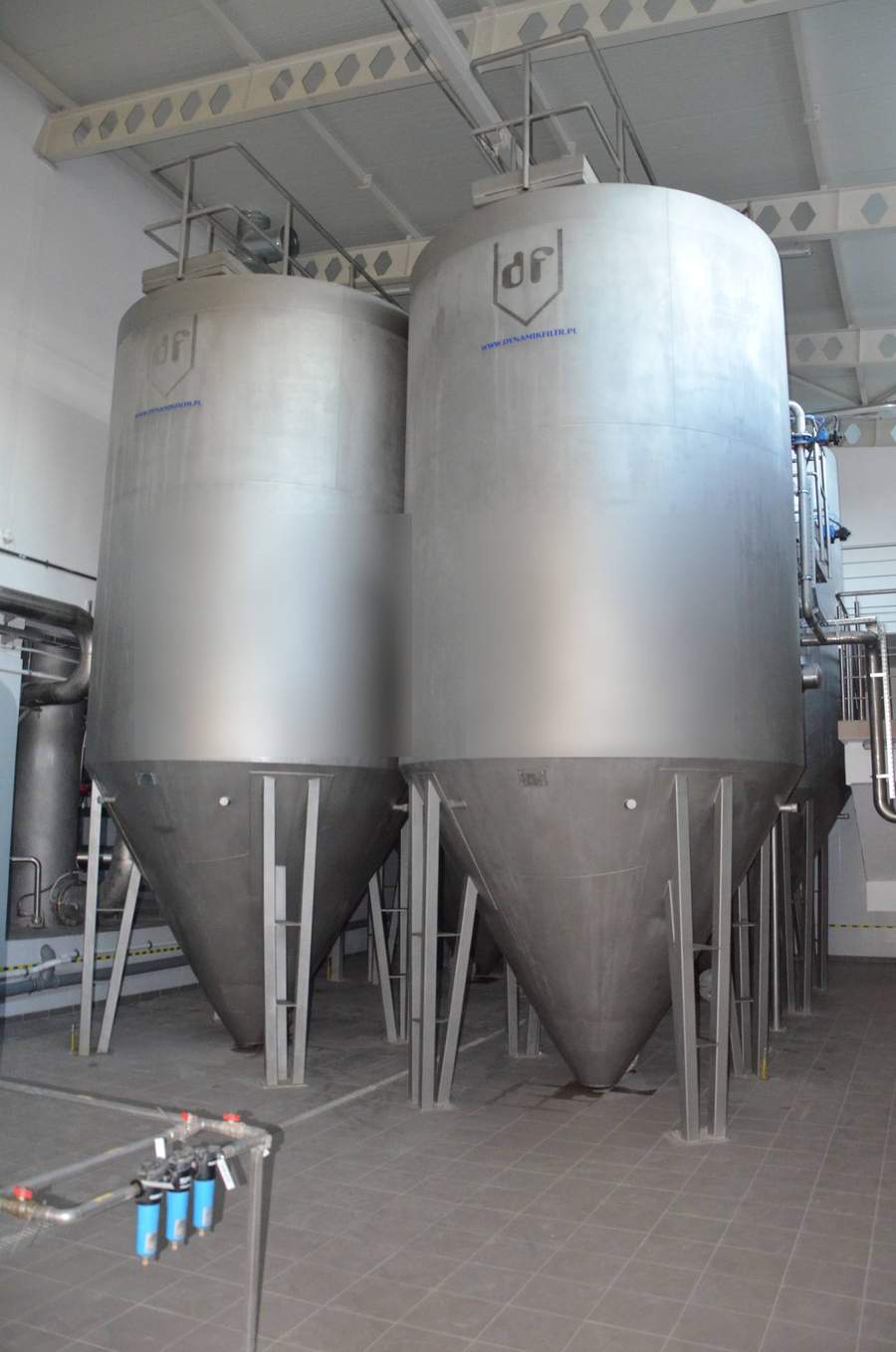
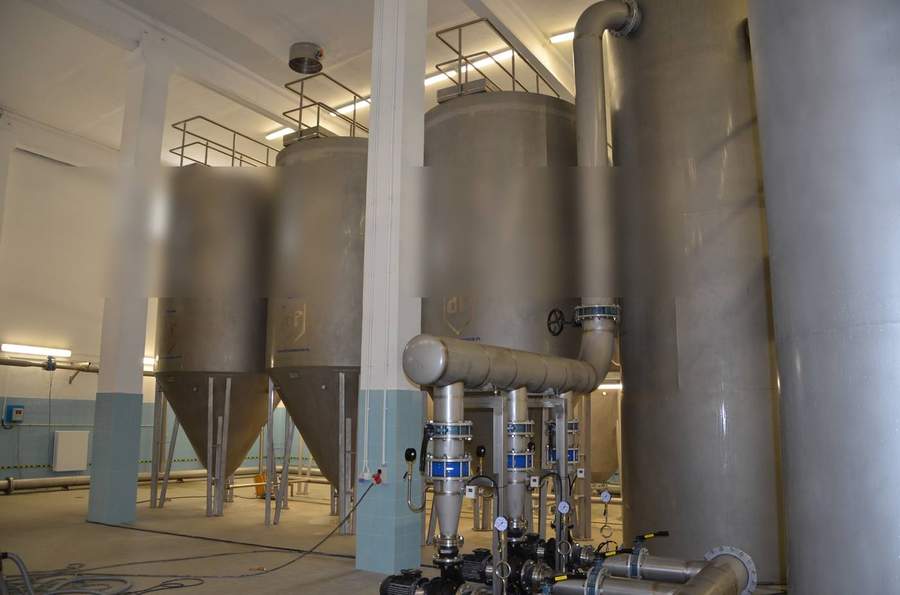
Conical Angle and Drainage: Standard cone half-angles are 45° or 60° from horizontal. A 60° cone (steeper) provides faster, more complete drainage of granular media by gravity — critical for media replacement and CIP drainage without residual wet pockets. The cone apex connects to a single DN100–DN200 flanged outlet fitted with a full-bore valve for media discharge or bottom draining. Most food-grade vessels are specified at 60° half-angle for this reason.
All pressure-retaining parts in 316L (1.4404) austenitic stainless steel: 2B mill finish internally, pickled and passivated (ASTM A380). External finish: brushed (Ra ≤ 0.8 µm) for pharmaceutical, or mill finish for food and process water. Full material traceability with EN 10204 3.1 mill certificates. Weld inspection: 100% visual, 20% dye penetrant or radiographic on pressure welds. PWHT not required for 316L below 50 mm wall thickness.
All internal welds ground flush and polished (Ra ≤ 1.6 µm food-grade; Ra ≤ 0.8 µm pharma). Nozzle connections via DIN 11851 dairy couplings or ASME BPE sanitary tri-clamp flanges — tool-free disassembly for inspection and cleaning. CIP sprayballs on dome-top and cone-apex ensure full internal coverage with cleaning solution (NaOH 1–2%, HNO&sub3; 0.5–1%, 60–80°C). Electropolishing optional for pharmaceutical water-for-injection applications.
Conical bottom apex valve (full-bore DN100–200) opens for complete media gravity discharge into a collection vessel or directly into big-bags. New media is loaded through the top manway. In paired-vessel installations, media can be transferred between vessels without external equipment. Total media replacement time for a DN1500 vessel: 4–6 hours, one operator, no confined-space entry.
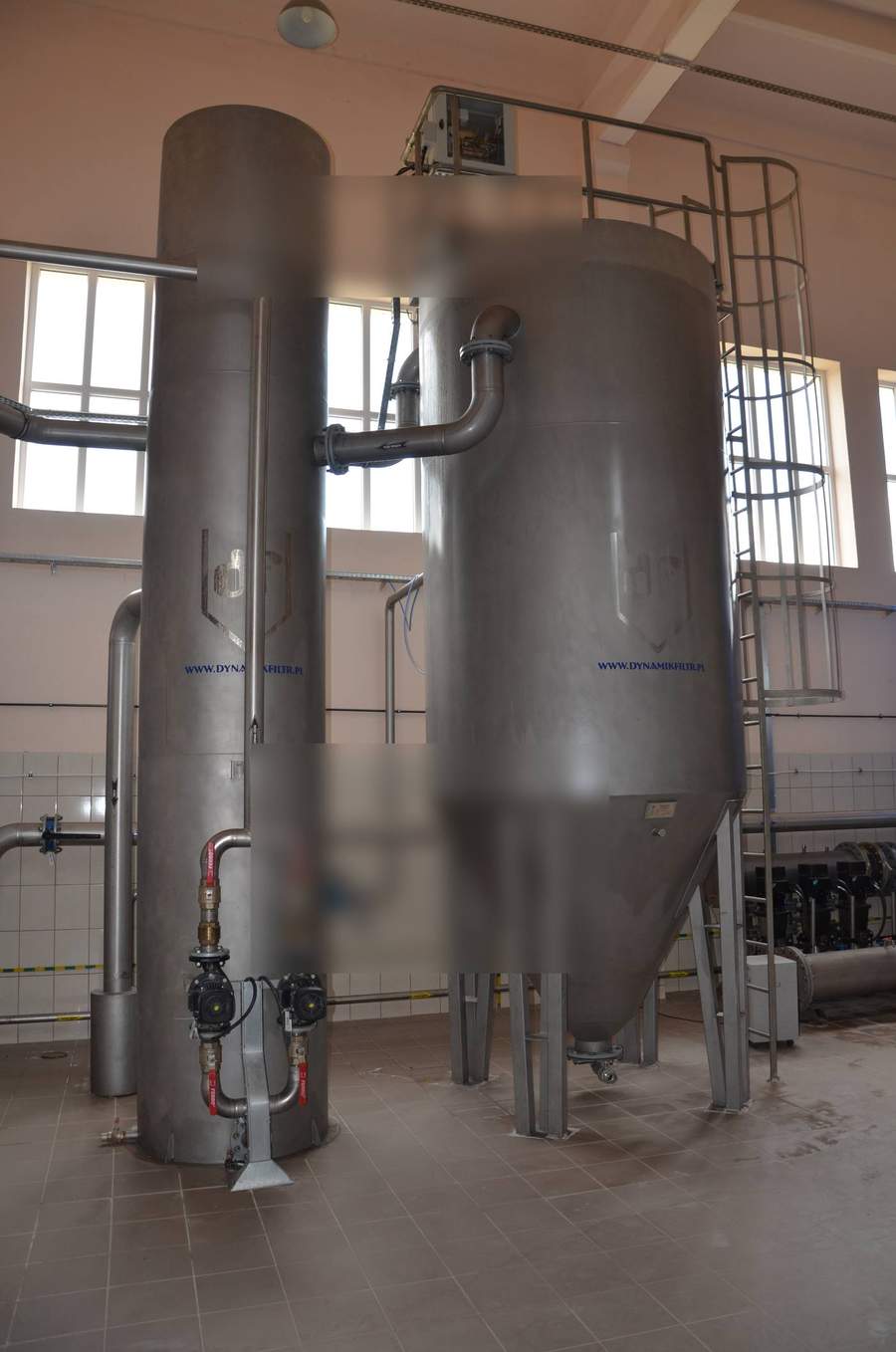
Stainless steel conical-bottom vessels are frequently installed in matched pairs sharing a common inlet header, outlet header and backwash manifold. Paired duty-standby operation allows one vessel to be taken out of service for inspection, media change or CIP while the other remains on duty — essential for 24/7 production process water supply.
| Sector | Application | Media | Key Design Requirement |
|---|---|---|---|
| Food and beverage | Process water polishing before product contact | Activated carbon + sand | NSF 61 / food-contact approval; CIP at 80°C |
| Pharmaceutical | Purified water (PW) pretreatment before UF/RO | Multi-grade sand + activated carbon | FDA 21 CFR; ASME BPE sanitary fittings; Ra ≤ 0.8 µm |
| Brewery | Brewing liquor treatment; yeast-free filtrate | Diatomite or sand/carbon MMF | CIP at 121°C SIP (steam sterilisation) optional |
| Electronics / semiconductors | Ultrapure water pretreatment | Activated carbon | Zero metal leach; orbital-welded fittings |
| Municipal drinking water (upgrade) | Iron and manganese removal | Greensand or Birm + sand | DWI Regulation 31 approved materials |
| Swimming pool and leisure | Recirculation filtration | Sand / glass media | Compact; top-mount multiport valve optional |
Confirm whether the application is food-contact (EC 1935/2004), pharmaceutical (FDA/EMEA), drinking water (DWI Reg 31) or process water (no regulatory requirement). This determines material certification level (EN 10204 2.2 vs 3.1 vs 3.2), surface finish specification, weld inspection extent and fitting standards (dairy vs. sanitary tri-clamp vs. flanged).
Calculate required filter area from design flow and HLR (8–20 m/h depending on media and duty). Select DN from standard range (DN800, DN1000, DN1200, DN1500, DN2000). Specify cone half-angle (60° recommended for granular media). Calculate overall vessel height (cylindrical section + cone height + domed top). Confirm headroom against minimum installation height (vessel height + 0.5 m manway access + 0.3 m crane hook clearance).
List all nozzles: inlet (DIN 11851 or ASME BPE size), outlet, top vent, bottom drain/media discharge (full-bore), sample point, CIP sprayball connection (×2: top dome and cone apex), differential pressure tappings (×2 or ×3), instrument connections. All sanitary nozzles have 0° or 15° crevice-free weld to vessel shell.
Food-grade: internal weld grinding to Ra ≤ 1.6 µm, mechanical polish, pickling and passivation per ASTM A380. Pharmaceutical: mechanical polish to Ra ≤ 0.8 µm followed by electropolishing (EP) per ASME BPE SF4–SF6 finish. Electropolishing removes the mechanical damaged layer and produces a Cr-enriched passive film resistant to cleaning chemicals.
Factory tests: hydraulic pressure test at 1.5× WP (minimum 30 min); surface roughness measurement report (Ra at 5 representative locations); weld inspection records; material certificates (EN 10204 3.1); roughness and passivation certificates. Pharmaceutical projects: IQ/OQ documentation package (Installation Qualification / Operational Qualification) prepared at FAT.
Sanitise vessels before media loading: 70°C hot water flush (food) or steam flush (pharma). Load media under controlled conditions — weigh each layer and record in commissioning log. Run 3 backwash cycles to bed media before placing on duty. Verify CIP sprayball coverage using riboflavin test (UV light confirms full internal surface contact). Issue Commissioning Protocol and handover to site operations team.
Media layer configurations, SDI and turbidity performance for all pressure vessel types.
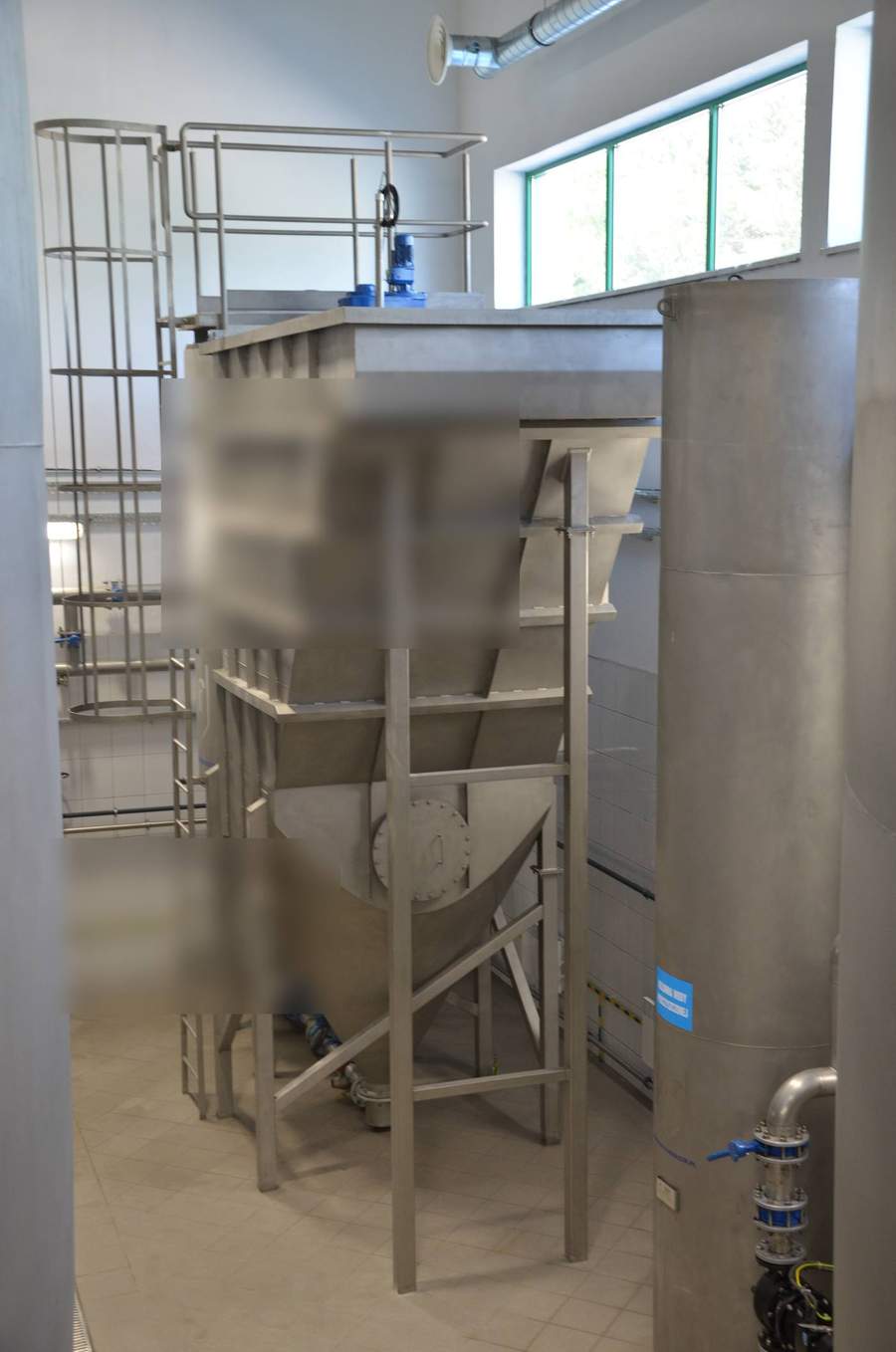
Read MoreStainless steel lamella clarifiers used upstream of conical-bottom pressure filters in food and beverage treatment trains.
Read MoreSanitary-grade coagulant and antiscalant dosing for upstream pretreatment ahead of SS pressure filters.
Read MoreShare your flow rate, water quality, sector (food/pharma/process) and surface finish requirement. We will specify a 316L stainless steel conical filter vessel with full documentation package.
Request Stainless Steel Filter SpecificationOur expertise spans multiple industries with sector-specific water treatment solutions.