
CFD thermal simulation for ECU, BMS, ADAS, and infotainment enclosures. Predict temperatures during driving, idling, and thermal soak. Optimise heat sinks and validate IP6K9K sealed housing performance from -40°C to +125°C.
CFD thermal simulation services for water treatment equipment.
CFD thermal simulation for LED lighting enclosures and heat sinks.
CFD thermal mixing simulation for tanks, reactors, and process vessels.
CFD thermal simulation for LiDAR enclosures. Predict laser diode temperature, prevent optical window condensation, and validate.
CFD temperature field in an engine bay ECU housing with heat sink
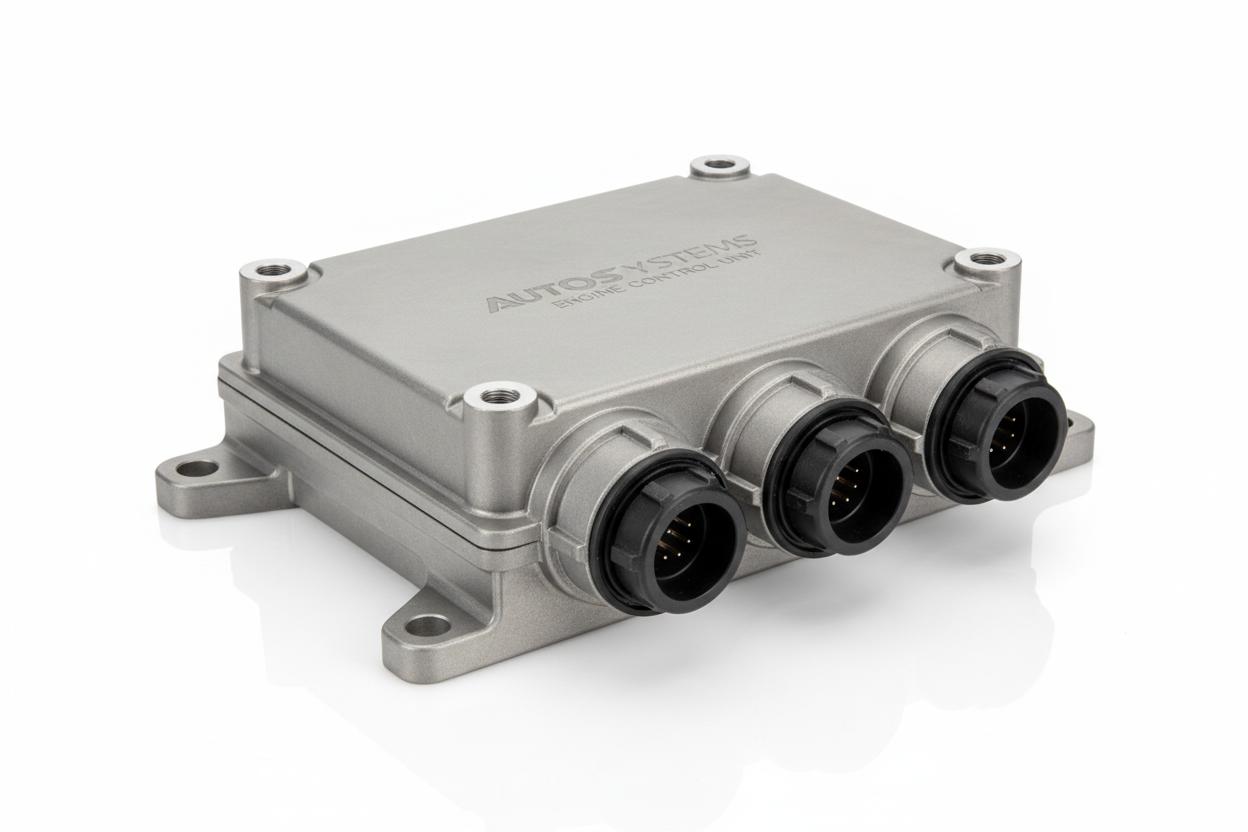
Modern vehicles contain 80-150 electronic control units managing everything from engine combustion to autonomous driving algorithms. These ECUs, battery management systems, ADAS controllers, and infotainment modules must survive the harshest thermal environment of any consumer product: under-hood ambient temperatures from -40°C in arctic winter to +125°C during thermal soak after engine shutdown, combined with vibration, salt spray, pressure washing, and electromagnetic interference. The thermal design challenge is compounded by ever-increasing computing power – Level 2+ ADAS controllers dissipate 50-200W in enclosures smaller than a shoebox.
Reynolds & Bauhm's automotive enclosure CFD models simulate under-hood airflow with full vehicle geometry, engine block radiation, exhaust manifold heating, and cooling fan interaction. We predict ECU internal temperatures during driving, idling, and soak conditions; optimise heat sink fin orientation for vehicle motion; and validate cooling strategies for every mounting location from the engine bay to the wheel arch to the cabin headliner.
Powertrain control modules mounted on or near the engine. Model conductive heat transfer from engine block, vibration fatigue, and fuel vapour exposure for E85 compatibility.
BMS enclosures in battery packs with cell balancing heat generation. Model liquid cooling plate integration, cell-to-cell thermal propagation, and crash safety venting.
High-performance GPU/FPGA enclosures for camera fusion and path planning. Dissipate 100-200W in compact enclosures with fanless or liquid-cooled designs.
Cabin-mounted head units, amplifiers, and displays. Model solar loading through windscreens, cabin HVAC interaction, and passenger thermal comfort impact.
TCU and electric motor inverters near hot transmission housings and stator windings. Model oil spray cooling, high-voltage isolation, and partial discharge prevention.
Safety-critical enclosures for autonomous brake and steer systems. ISO 26262 ASIL-D thermal validation with fault-tolerant cooling redundancy.
| Ambient Operating Range | -40°C to +85°C (Grade 1), -40°C to +105°C (Grade 0) |
| Under-Hood Soak Max | +105°C to +125°C (after engine shutdown) |
| Thermal Shock Range | -40°C to +85°C in <15 minutes (splash water) |
| ECU Heat Dissipation | 5 – 50W (conventional), 50 – 200W (ADAS/EV) |
| Vibration (Random) | ISO 16750-3: 5 – 2000 Hz, 50g shock |
| Salt Spray | ISO 9227: 96 – 1008 hours (coastal/marine variants) |
| IP Rating | IP6K9K (under-hood), IP5K0 (cabin), IP6K7 (under-body) |
| EMC | CISPR 25 Class 5 (750 MHz – 6 GHz) |
A European EV manufacturer experienced intermittent BMS fault codes during fast-charging sessions in summer ambient temperatures above 35°C. The BMS enclosure was a sealed aluminium housing mounted on the battery pack exterior, cooled only by natural convection and conduction to the pack structure. During 150 kW fast charging, cell balancing resistors inside the BMS dissipated 85W of heat – sufficient to raise internal air temperature to 98°C, beyond the 85°C limit of the critical isolation monitoring IC. The thermal shutdown triggered charging interruption, extending a 20-minute charge to 35 minutes and generating customer complaints. Reynolds & Bauhm performed conjugate heat transfer CFD of the BMS enclosure with detailed component heat mapping, battery pack structure conduction, and under-body airflow during driving and stationary charging. The model revealed that the BMS housing was shielded from under-body airflow by a plastic aerodynamic cover that created a stagnant air pocket with effective ambient of 52°C – 17°C above the free-stream air temperature. We recommended: (1) replacing the solid cover with a louvered panel that allowed under-body airflow while maintaining aerodynamics, (2) adding a 15W micro-blower inside the BMS housing to force air across the balancing resistor heat sink, and (3) applying a 0.5 mm graphite TIM pad between the BMS base and battery pack cooling plate. Post-modification CFD predicted a maximum internal temperature of 76°C at 40°C ambient during 150 kW charging – a 22°C improvement. Summer fleet telemetry data showed charging interruption rate reduced from 23% to 2%, and average fast-charge time decreased from 31 minutes to 22 minutes. The changes cost per vehicle and were rolled out across 180,000 units in production.
Internal temperature reduced from 98°C to 76°C during 150 kW fast charging.
Fast-charge time reduced from 31 minutes to 22 minutes, a 29% improvement.
per vehicle modification rolled out across 180,000 units with full project benefits in 3 months.
Full vehicle CAD with engine bay, under-body, wheel arches, and cabin. Grille, hood, and undertray airflow paths resolved.
Engine block, exhaust manifold, radiator, and ECU heat radiation mapped. Component power dissipation from electrical schematics.
Highway, urban, idling, and soak scenarios with vehicle speed, fan speed, and ambient temperature variation across seasons.
Water ingress paths during wading and pressure washing simulated to validate IP6K9K sealing and drainage design.
Post-shutdown thermal soak with engine block radiation, exhaust manifold decay, and solar loading on dark under-hood surfaces.
Component temperature tables, hotspot maps, transient soak curves, and correlation with climatic wind tunnel and field testing.
Road vehicles environmental testing for electrical equipment. Covers thermal, mechanical, and chemical durability for global OEM programmes.
Automotive Electronics Council qualification for integrated circuits and multi-chip modules in under-hood and cabin environments.
Functional safety for automotive E/E systems. Thermal management must support ASIL-B through ASIL-D safety integrity levels.
German OEM electrical and electronic component test specifications with severe thermal, EMC, and lifetime requirements.
DIN 40050-9 ingress protection for high-pressure, high-temperature wash jets. Mandatory for under-hood and under-body enclosures.
Electromagnetic compatibility for vehicles – radiated and conducted emissions from ECUs, inverters, and DC-DC converters.
CFD enclosure thermal simulation predicts internal temperatures, identifies hotspots, and validates cooling strategies before prototype fabrication. Speak with our thermal engineers to safeguard your electronics.
Our expertise spans multiple industries with sector-specific water treatment solutions.